
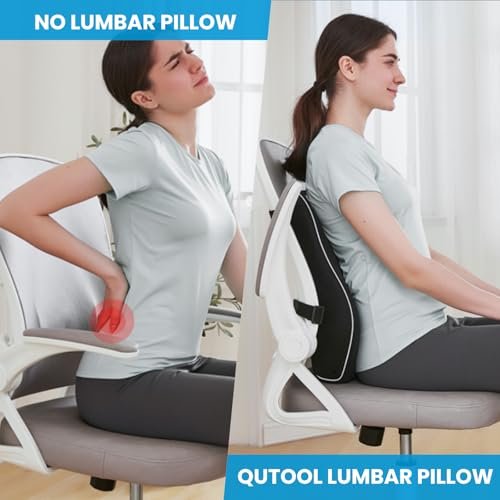
The best Lumbar Pillow can ease sitting strain, support better posture, and make work or travel more comfortable.
You may know the feeling: after hours at a desk, in a car, or on a sofa, your lower back feels tired and tight. A good Lumbar Pillow can fill the gap between your back and the seat. It may help you sit in a more natural position and reduce pressure from a flat chair. I reviewed the available option below with a focus on support, fit, comfort, straps, care, and value. This is not a medical device, and it should not replace advice from a qualified health professional.
See the differences between my top picks at a glance.
Lumbar Support Pillow with Adjustable Straps

This Lumbar Pillow targets people who spend long periods in office chairs, car seats, or home chairs. Its main feature is a pair of adjustable straps. These straps help hold the pillow in place instead of letting it slide down during normal use. The product title also lists a mesh cover, which may suit users who prefer a less sealed and more breathable outer surface.
I like the simple design because it fits several parts of daily life. You can move it from a desk chair to a vehicle seat or a living room chair. The pillow aims to support the lower back and encourage a more upright sitting position. Still, comfort depends on your body shape, chair depth, and preferred firmness, so I would check the size and return terms before ordering.
Pros:
- Adjustable straps help reduce unwanted movement
- Works across office, home, and car seating
- Mesh cover may feel more breathable than a fully closed cover
- Supports the lower back without requiring a special chair
- Simple design makes it easy to move between seats
- May help fill a wide gap between the user and the chair back
Cons:
- The ideal fit depends on the chair and the user’s body shape
- Some users may prefer a softer or thicker cushion
- The straps may need adjustment when the pillow moves to another seat
- It does not replace medical care for ongoing or severe back pain
What Amazon Buyers Are Saying
Customer feedback for support pillows often centers on fit, comfort, and whether the cushion stays in place. Buyers who like this type of design tend to value the adjustable straps because they can position the pillow at the lower back instead of constantly pushing it back into place. Many shoppers also look for a cover that feels comfortable during long periods of sitting.
The most useful review details are personal. A short user may place the pillow in a different spot than a tall user. A deep car seat may need a different position than a narrow desk chair. Some buyers may enjoy firm support, while others may find the same level of firmness too strong. I recommend reading the newest verified reviews and checking comments about size, pressure, strap fit, and heat before buying.
My Recommendation
I recommend this Lumbar Pillow for shoppers who want a portable back support cushion with adjustable straps. It makes the most sense for office workers, drivers, students, and anyone who uses more than one seat each day. I would not buy it as a cure for back pain. I would buy it as a practical seating aid, provided the dimensions and firmness match your needs.
Why a Lumbar Pillow Can Help During Long Sitting
Many chairs leave a space behind the lower back. When that space stays empty, a person may slump to feel supported. Slumping can place the head, shoulders, and hips in a less balanced position. A lumbar support cushion fills some of that space and gives the lower back a place to rest.
A pillow cannot force perfect posture. It also cannot solve every source of back discomfort. However, it can make a chair feel more supportive. That small change may help you sit with less effort during work, study, gaming, driving, or travel.
Good sitting habits still matter. The National Institute of Neurological Disorders and Stroke notes that back pain can have many causes. The Mayo Clinic also recommends paying attention to posture and using supportive seating as part of a wider approach. If pain lasts, spreads down a leg, causes weakness, or follows an injury, speak with a health professional.
Support Versus Correction
A Lumbar Pillow provides support. It does not “correct” every posture problem by itself. Your feet, hips, screen height, desk, and chair also affect how you sit. A cushion may work well when you set up the rest of the seat in a sensible way.
Try to keep both feet supported. Let your knees sit near hip level. Keep the screen close to eye height when you work at a desk. These simple steps can work with the pillow rather than making it do all the work.
Why Position Matters
The lower back has a natural inward curve. A back cushion should usually rest near the belt-line area, not high between the shoulder blades. If the pillow sits too high, it may push the middle back forward. If it sits too low, it may not fill the gap that causes slouching.
Start with a small adjustment. Sit back. Notice where the cushion touches you. Then move it up or down until the support feels even. Avoid forcing your body into a stiff position. Comfortable support should feel steady, not painful.
How to Choose Lumbar Pillow
Choosing the right Lumbar Pillow takes more than picking the softest option. You need to match the cushion to your chair, your daily routine, and your preferred level of support. I focus on three areas: fit, material and shape, and long-term value.
1. Match the Pillow to Your Main Seat
Start with the seat you use most. An office chair may have a tall back and a fairly upright angle. A car seat often slopes back and has a deeper cushion. A sofa may feel soft and allow the pillow to sink. These differences affect how a lumbar cushion feels.
For office use, look for a pillow that stays stable when you lean back and reach toward a keyboard. Adjustable straps can help because the cushion does not rely only on friction. You can set it at the right height and keep it there through the workday.
For driving, check that the pillow does not push you too far forward. A thick cushion can change your distance from the wheel. It may also change your view or leg position. Test the setup while the vehicle is parked. Make sure you can reach the controls and use the pedals with ease before driving.
For a home chair, think about how often you will move the pillow. A portable model makes sense if several people use the chair or if you move between a desk and a sofa. If the cushion will stay in one place, you may care more about its shape and cover than its portability.
2. Check Shape, Firmness, and Breathability
The shape should support the lower back without creating a hard pressure point. Some people prefer a firm cushion with a clear curve. Others want a softer feel that blends into the chair. Neither choice suits everyone. Your usual posture and the chair’s own padding matter.
Look at the product photos and written details. Check whether the pillow has a broad support area or a narrow center. A broader shape may spread pressure over more of the back. A compact shape may fit better in a small car seat or a narrow task chair.
Firmness can change over time. Foam may feel firm when you first sit down, then soften as your body warms it. The listing may not state the exact foam type or density. If those details matter to you, contact the seller or read the latest product information before placing an order.
A mesh cover may appeal to people who dislike a warm back. It can allow more air movement than some solid fabric covers. Still, breathability depends on the full design, not just the outer layer. Room temperature, clothing, and the chair itself also affect heat.
Care instructions matter as well. Check whether the cover can be removed and washed. If the listing does not confirm machine washing, do not assume it. A gentle surface clean may be safer. Always follow the care directions supplied with the product.
3. Compare Adjustment, Durability, and Value
Straps are useful when they hold the cushion at the right height. Double adjustable straps may offer more control than a loose single strap. However, a strap system can feel awkward on some chairs. Check where the straps sit and whether they fit around your seat back.
Look for strong seams and secure attachment points. These areas receive repeated tension when you adjust or move the cushion. A clean cover and even stitching can suggest careful construction, but appearance alone cannot prove long-term durability.
Think about value in daily use. A low-cost cushion that slides away may frustrate you. A slightly more expensive model that stays in place may offer better value if you use it every day. Also consider whether one pillow can serve your desk, car, and home chair. Portability can add value when you need support in several places.
Do not judge value only by the price shown today. Amazon prices, coupons, stock, and seller offers can change. Check the current price, delivery terms, warranty, and return policy before you buy. Read recent customer feedback too, since older reviews may describe a different version or listing.
How to Set Up Your Lumbar Pillow
Correct setup can make a large difference. First, place the cushion against the chair back near your lower back. Sit down slowly and let your hips move toward the back of the seat. Adjust the pillow until it supports the natural curve without forcing your chest forward.
Next, secure the straps. They should hold the pillow in place but should not twist or pull the chair cover. If the chair has a very wide back, the straps may not sit as the maker intended. In that case, check the product instructions and stop if the fit feels unsafe.
Use the pillow for a short period at first. Ten to fifteen minutes gives you time to notice pressure points. If it feels good, add more time over the next few sessions. If you feel sharp pain, numbness, tingling, or new discomfort, remove it and seek professional advice when needed.
Desk Setup Tips
Place your chair close enough to the desk so you do not lean forward. Keep your elbows near your sides. Let your shoulders relax. If you must reach far for the mouse or keyboard, even a good lumbar cushion may not solve the strain.
Change position often. Stand, walk, or stretch during breaks. No chair position works well when you hold it for too many hours without movement. A cushion works best as one part of a healthy work routine.
Car Setup Tips
Set the driver’s seat before placing the cushion. Adjust the seat distance, back angle, and headrest first. Then position the pillow at the lower back. Make sure the cushion does not interfere with the seat belt or restrict your movement.
Never adjust the cushion while driving. Pull over in a safe place if you need to change it. The pillow should support comfort, but safe vehicle control must come first.
Home Seating Tips
Soft sofas can swallow a back cushion. If the pillow sinks too deeply, place it against a firmer section of the backrest. A chair with a stable frame may give better results than a very soft couch.
Check the pillow after each use. If it has shifted, reset it instead of leaning around it. A small change in position can affect how evenly it supports your back.
Common Mistakes to Avoid
The first mistake is choosing by appearance alone. A stylish pillow may still be too tall, too firm, or too thick for your chair. Always consider dimensions, shape, and adjustment features.
The second mistake is placing the cushion too high. Lower-back support belongs near the lower curve of the spine. Start low and move it upward in small steps.
The third mistake is tightening the straps too much. The pillow should stay in place, but excessive tension may damage the straps or pull the cushion into an odd shape. Use enough tension for stability.
The fourth mistake is expecting instant medical results. A back support cushion may improve comfort for some people. It cannot diagnose or treat a condition. Ongoing pain needs proper assessment.
The fifth mistake is ignoring the chair. If the seat pan is too deep, your feet do not reach the floor, or the backrest leans too far, the pillow may only partly help. Fix the chair setup when possible.
Care and Cleaning Tips
Keep the Lumbar Pillow dry and away from direct heat unless the care label says otherwise. Heat can affect some cushion materials. Do not soak the inner support unless the manufacturer clearly allows it.
For a removable cover, follow the washing instructions. Use mild soap when the label permits. Let the cover dry fully before putting it back on the cushion. Moisture trapped inside can create an unpleasant smell.
Inspect the straps from time to time. Look for fraying, loose stitching, or a buckle that no longer holds. Replace the pillow if its support has collapsed or if damage affects safe use.
Who Should Consider This Lumbar Support Pillow?
This model may suit people who spend many hours in one or more seats. Office workers may appreciate the straps during a long work session. Drivers may like the ability to move the pillow between vehicles or seats. Students and gamers may use it to add support to a basic chair.
It may also help people who dislike cushions that slide toward the floor. The double adjustable straps give you more control over placement. That feature becomes more useful when the chair has a smooth back or when you change positions often.
It may not suit users who want a very soft pillow. It may also disappoint anyone who needs a precise orthopedic fit or a cushion with detailed medical design. Those shoppers should ask a clinician for guidance and review the product measurements with care.
Who May Want a Different Option?
A person with a narrow racing-style car seat may need a smaller cushion. A very soft sofa may need a flatter support pad. Someone who sits at a standing desk part of the day may prefer a lightweight design that stores easily.
You may also want another option if you need a washable cover and the listing does not clearly confirm washing instructions. In that case, select a product with clear care details. Product information matters as much as the headline features.
Final Verdict: Which Should You Buy?
The Lumbar Support Pillow with Adjustable Straps is my top choice here. Its adjustable fit, mesh cover, and portable design suit office chairs, cars, and home seats. I rate it 4.3 out of 5.
If you need simple lower-back support, this Lumbar Pillow offers a practical place to start. Check the size, current price, reviews, and return policy before buying.
FAQs Of Lumbar Pillow
What is a Lumbar Pillow used for?
A Lumbar Pillow fills the space between your lower back and a chair. It may improve sitting comfort and support a more natural posture.
Can I use this Lumbar Pillow in a car?
Yes. The adjustable straps are designed to help secure the pillow to a seat. Set it up while the car is parked, and make sure it does not affect safe control.
Where should a Lumbar Pillow sit?
Place it near the lower back, around the natural inward curve above the pelvis. Move it in small steps until the support feels even and comfortable.
Is a Lumbar Pillow good for back pain?
It may improve comfort for some people, but it does not treat every cause of back pain. Seek medical advice for severe, lasting, or spreading pain.
How do I clean a Lumbar Pillow?
Follow the care label. Clean the cover as directed, avoid soaking the inner cushion unless approved, and let all parts dry fully before use.
Should a lumbar support cushion feel firm?
Firmness depends on your body and chair. The cushion should support you without creating sharp pressure or forcing your back into an uncomfortable position.